
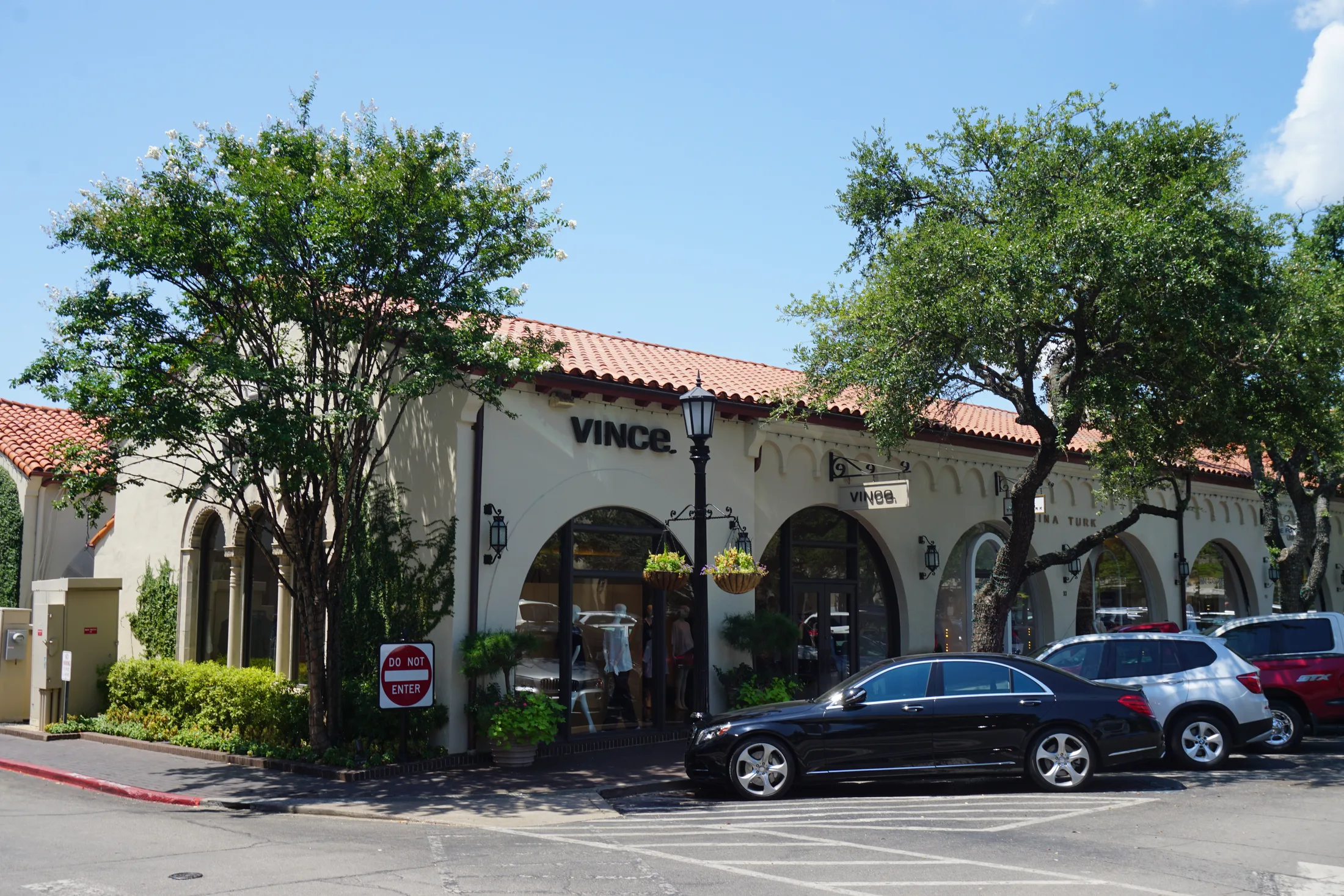
Highland Park Village exterior and Spanish-influenced architecture.
Photo by Michael Barera. Source · CC BY-SA 4.0 · Resized, compressed and converted to WebP for website delivery
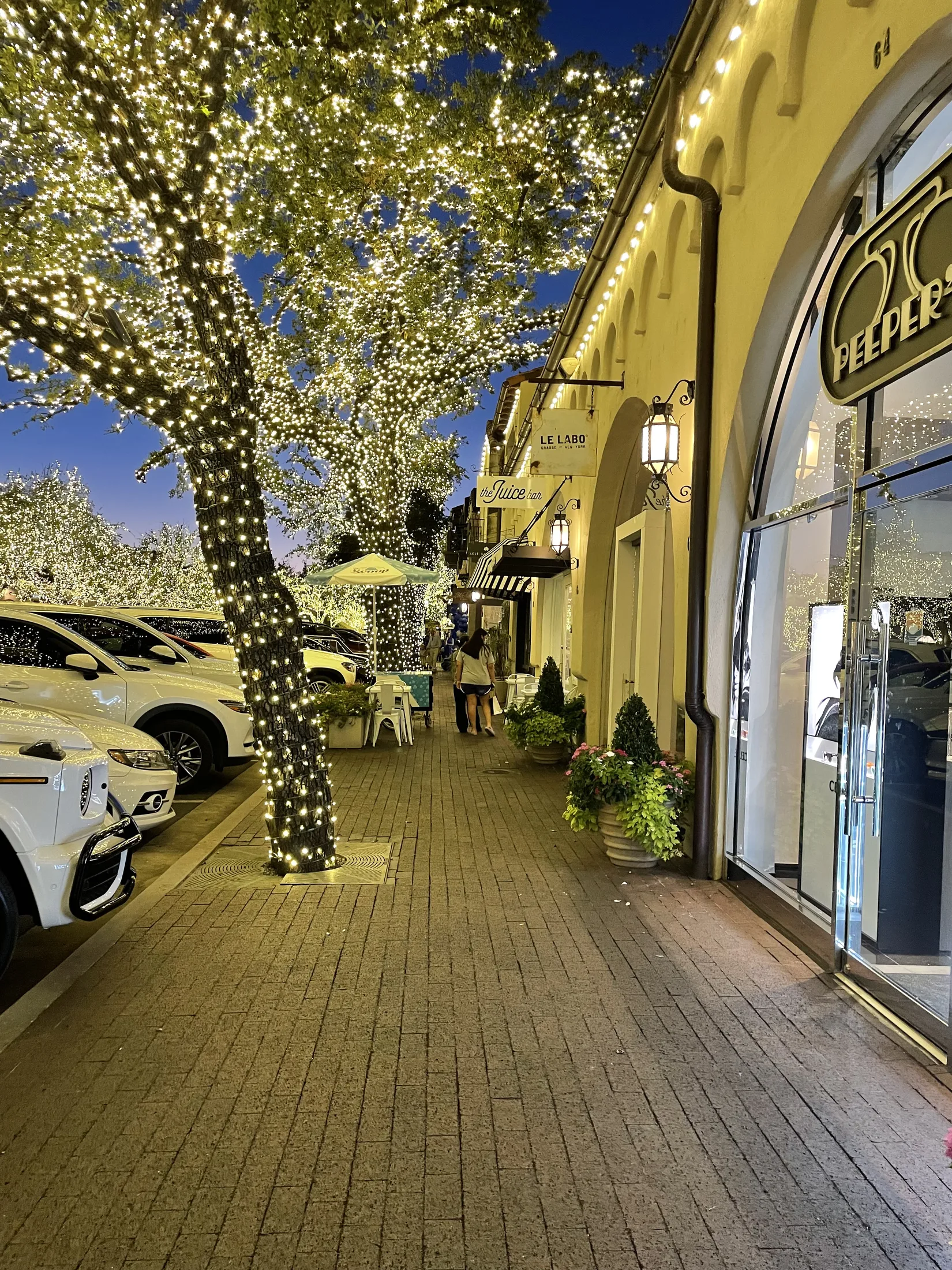
Highland Park Village at night.
Photo by Harry Bouchard. Source · CC BY-SA 4.0 · Resized, compressed and converted to WebP for website delivery
Before Highland Park: Turtle Creek and Preston Road
The Town of Highland Park's official historytraces the area's early recorded story to Turtle Creek and to an old route that became Preston Road. The Republic of Texas surveyed part of the route in 1838, and the corridor later connected Dallas with northward travel.
By the late nineteenth century, Colonel Henry Exall and investors had acquired large tracts in the area. Exall built a dam on Turtle Creek in 1890, creating Exall Lake, and referred to the area as lomo alto—high land.
A planned residential community
In 1906, John S. Armstrong acquired the former Philadelphia Place property and envisioned a residential community named Highland Park. In 1907, Armstrong's group hired landscape designer Wilbur David Cook. The Town's history notes that Cook's plan reserved about twenty percent of the original land for parks, a decision that still influences the community's appearance.
The first lots were sold in 1909, and additional development followed as streets, homes and public spaces took shape.
Incorporation and independence beside Dallas
Highland Park residents voted to incorporate on November 29, 1913. Dallas later sought to annex the Town, but Highland Park remained a separate municipality as Dallas grew around it. Town Hall arrived in 1924, and civic facilities expanded over the following decades.
Highland Park Village and the growth of a local center
The Town records Highland Park Village as constructed in 1931 and describes it as the first shopping center of its kind in the United States. It became one of the defining commercial landmarks in a community otherwise dominated by residential streets, parks and civic spaces.
That mix—residential Highland Park, Highland Park Village, nearby Dallas Country Club, SMU and the commercial corridors toward Knox—helps explain why Park Cities life is closely connected to Dallas even though Highland Park has its own municipal government.
What the history means for a modern move
Historic neighborhood character does not translate into one universal moving rule. Streets, driveways, construction conditions and home layouts vary property by property. Stonebriar confirms the actual access plan for a residence rather than assuming that every Highland Park home works the same way.
The short distance to Uptown, Turtle Creek and Knox also creates a common Dallas move pattern: a household can change from a single-family home to a condominium or high-rise without leaving the central Dallas area. Those moves are short geographically but often involve very different loading, elevator and building requirements.